



Chann3l Chas3r
-
Posts
160 -
Joined
-
Last visited
Content Type
Profiles
Forums
Character Archive
Frequently Asked Questions
Equestrian Empire Character Archive
Golden Oaks Memorial Library
Pony Roleplay Characters
Events
Blogs
Everything posted by Chann3l Chas3r
-
request shop [Temporarily Closed to Catch Up] I want pony practice, you want pony art. Win-win!
Chann3l Chas3r replied to Chann3l Chas3r's topic in Requestria
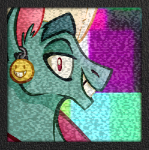
Here he be! I wanted to focus on the facial expression more than anything so I hope you don't mind too much that he's a floating head. -
request shop [Temporarily Closed to Catch Up] I want pony practice, you want pony art. Win-win!
Chann3l Chas3r replied to Chann3l Chas3r's topic in Requestria
Here ya go--one bomb-bearing baby bracing to beget a big blast! -
request shop [Temporarily Closed to Catch Up] I want pony practice, you want pony art. Win-win!
Chann3l Chas3r posted a topic in Requestria
Exactly what it says on the tin--I wanna brush up my pony-drawing skills, so send me your OCs and get anything from a doodle to a full-blown finished picture! One OC per person, but if you really can't choose between your babies, post the OCs you'd want drawn and I'll draw the one I like best. Thanks in advance! -
This was made digitally, but I learned the most important skills from drawing on paper. Not having Ctrl+Z to lean on has a way of making you learn from your mistakes! I'd definitely recommend getting some pen-and-paper practice in. I don't know how much you've worked with them, but here's some tips just in case: Printer paper is cheap and as good a medium for pencils, pens, and ink as any pricey sketchpad. A mechanical pencil is a mechanical pencil, no matter how fancy it looks. BIC brand mechanical pencils have great-quality lead and erasers, and are cheap. Remember to not touch your pencil erasers! They'll get your skin oil all over them and when you use them, the oil leaves graphite smears that won't come off. Quality colored pencils are worth it, as are quality inking pens. You can get a wide range of colors out of minimal materials if you mix colored pencils and inks! A set of 12 Copic markers and a set of 24 Prismacolor pencils will give you a lot of colors to work with if you mix them together. When mixing colored pencils and inks, it pays to make a palette to refer to later. It takes time--you'll have to lay down each of your pencil colors for as many markers as you have, then color them over with the markers, and list what pencil and marker you used beside the sample. It's super-useful, though, and keeps you from making mistakes from guesswork, and from wasting pencil/ink mixing them together every time you want to test a color mix. Another thing, try adding patterns and textures with your colored pencils before inking them over! It really helps breathe life into the work. Hope some of that helps!
-
Create a stupider MLP episode title than the one above
Chann3l Chas3r replied to Never Returning's topic in Forum Games
Celestia Takes a Vacation and Everything Goes Wrong (again). -
Cursed to never be able to find the word on the tip of your tongue, but instead can only think of similar-sounding but incorrect words.
-
Granted! You can now only wish to have more wishes. I wish I could always remember where I put things instead of losing them five minutes after setting 'em down.
-
Your first thoughts on the user above you
Chann3l Chas3r replied to Sondash Studios's topic in Forum Games
Thanks for being part of the team that brought us this site and kept it running! Also, nice avatar--I'm returning after several years I didn't know we could have GIFs as avatars now -
"Some stuff might look funky." [proceeds to post absolutely epic art] I know I said this on your other post but I hella dig your style. I like the more real-world-equine-anatomy approach you've taken, while still keeping things cartoony. Your hair shading is lovely and your colors are, too! Can't wait to see more from ya
-
My OC! (used a base idk if thats allowed)
Chann3l Chas3r replied to AppleMaquillage's topic in Visual Fan Art
Oh, I LOVE the colors on her! Looks like she's a bit closer to the Oranges than the Apples, personality-wise--I like it. I could totally see her hitting up cousin Applejack to see if she can get her some time with Rarity to pitch a combo fashion-makeup show.- 1 reply
-
- 1
-

-
- earth pony
- my little pony
- (and 1 more)
-
Normally I prefer to post finished pieces but I've spent five hours on this darn thing and could use some motivational feedback. I gave him boar tusks, fish gills, and a skink tongue because why not. If anyone's got suggestions for other animal parts to slap on everyone's favorite chaos god, I'll take 'em into consideration!
-
Ooh, me gusta! It's overall a very nice design but I particularly like how you drew the wings. Also, teeny hooves. I love it when artists add visible hooves to their designs!
-
I was gonna drop an OC request here but it looks like you've got your hands full already! So have this instead--dunno if this will help at all, but a couple years ago I doodled this as a pony anatomy reference for myself. Hope it helps some, and keep up the good work!
-
@Splashee : Thankya for the in-depth answer! SU's final season will be over a good while after FIM ends, so I'll wait 'til then to submit it. I'm gonna have a live-watch of FIM over the course of probably nine days in about a week here, maybe two, to get caught up and meet some other fans; I'll whip up something once I'm all caught up and see if it makes the cut!
-
What would Rarity think of Soviet architecture?
Chann3l Chas3r replied to eddeams's topic in Sugarcube Corner
 Brutalism is as valid of an art as any other style of architecture, and gets a bad rap because of the circumstances in which it arose, I think. It's practical, imposing, and if done right can actually be quite aesthetically pleasing! Rarity is pretty open-minded when it comes to art and design. I think she'd appreciate the very specific vibe it gives off and might even take inspiration from it, seeing as it's very unlike anything that exists in Equestria that we've seen. (I think. I just got back in the fandom, ain't caught up since S3 so... shrug) This wasn't included in the small gallery I linked to, but I really liked it so here it be:
 -
Here's my technicolor horse, Oracle, in case you feel like doing more after your first three.
-
Banned for calling me out At least I 'met a' person willing to do so :}
-
Banned for such a cruel pun-ishment! I'm just pun-dering to the current topic. I'll need to look at the ap-pun-dix of Good Jokes to find something else so I don't get pun-ted off this thread...
-
Banned for pun-derappreciating good jokes.
-
@Kamii : Aww, how sweet! And it reminds me of something. No idea if you're into Steven Universe at all, but even if you're not, this is a really good comic about having The Sads and you don't need any context to enjoy it. ________________ Current question is: "What's the most recent, small thing someone has done for you--friend, lover, sibling, etc.,--that really made you feel loved and appreciated? For instance, someone buying you a cheap trinket at a thrift store not because the thing itself is really good or important but because they knew you'd love it and it reminded them of you?"
-
8/10! I could be-bop to this for a good hour, what an upbeat tune You know that dude who made 'Cows & Cows & Cows' as well as many other mindboggling, fantastically edited, creepy sleep-paralysis-episodes-come-to-life made with old vintage films, photos, Adobe Flash, and enough raw creativity to drive a man insane? Well, he also made this this relaxing little slice of heaven!
-
general Is your bank account a happy one?
Chann3l Chas3r replied to Muffinnz's topic in General Discussion
What you did there. I see it. -
Well, I've heard that @TheRockARooster is truly a fowl person to be around! Now, I'm not here to argue feather or not this accusation is true, but I have some an-egg-dotal evidence--I saw him try to wing it in a dangerous situation once, but he quickly chickened out and plucked off! When will he take the hen-t to braven up? 🥁 🥁 📀